Share this

PORTLAND CHILDREN’S LEVY

2026 Community Report: The next generation blossoms

Newly planted seeds don’t grow on their own. They need the right nutrition, a supportive environment, and intentional care before they bloom and thrive.

Grantee partners of the Portland Children’s Levy are experts in providing what’s needed for future generations to flourish. Parent education and home visit programs, regular access to healthy foods, and supportive mentors are just some of the services supported by PCL grants.

The 2024-25 year was the last of a five-year grant cycle marked by a pandemic, community reckonings with racial injustice and other challenges. Like flowers blooming out of concrete, community-based organizations supported children, youth and families in Portland to build strong roots, nurture growth and blossom through adversity.

At PCL, the period saw an increased emphasis on adapting to evolving community needs and centering community voice. The creation of the Community Council in 2023 led to advisory body members shaping the community engagement process, streamlining grant applications and processes, and making recommendations on which grant applications to fund.

In June 2025, City Council awarded $71 million for new, three-year large grants after a competitive funding process. That took place as 85 past large grants featured in this report ended on June 30, 2025. Meanwhile, a competitive funding round for small grants launched in fall 2025, with new small grants beginning July 2026.
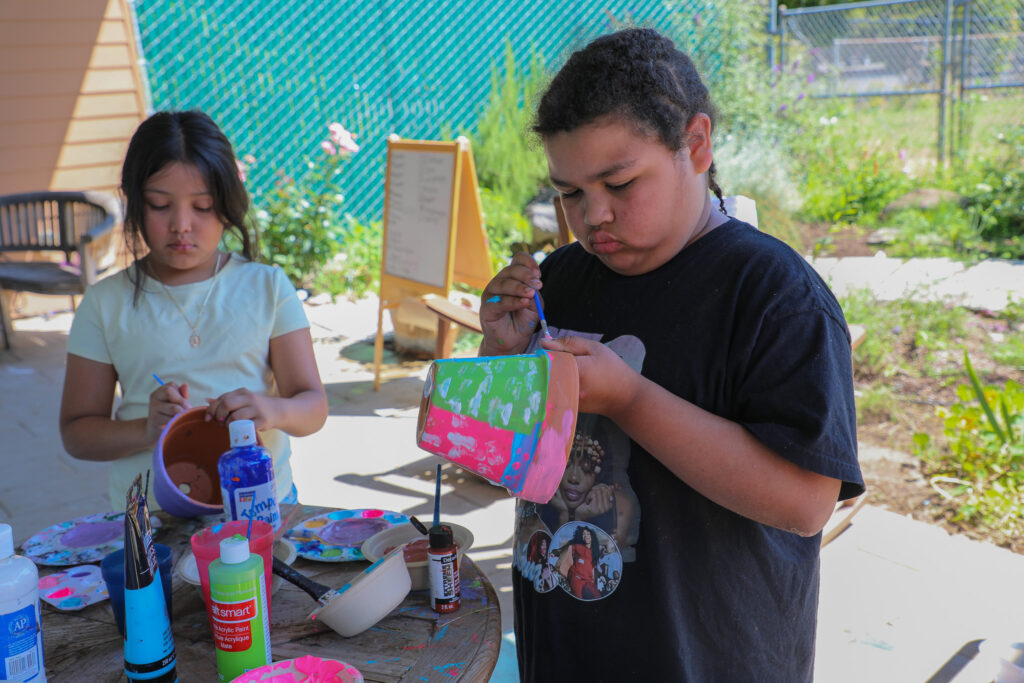
Photo of two children standing around a table covered in paint bottles and art supplies. Both children hold paintbrushes in their right hands to paint flowerpots held in their left hands.
Above: Participants in Friends of the Children’s summer literacy camp paint flowerpots in the garden.

2024-25 Grants Awarded by Program Area

program grants
grant funds

Early childhood

Supporting children’s early development and kindergarten readiness

Hunger relief

Expanding access to healthy food for children and their families

After school

Supporting children’s well-being and school success

Foster care

Supporting the well-being and development of children in foster care

Child abuse prevention and intervention

Stabilizing families, building resilience and preventing child abuse and neglect

Community childcare initiative

Making quality childcare affordable for working families with low incomes

Mentoring

Connecting children with caring mentors who support their well-being

Small grants

Improving equity of access for smaller organizations

children served by Levy grants*
lived in homes in which the primary language spoken was not English*
lived or went to school east of 82nd Avenue*
identified as Black, Indigenous and people of color*‡
pounds of food distributed at more than 60 sites by hunger relief grantee partners

Building strong roots

Many PCL-funded programs help families build strong roots and parenting skills to support continuous growth.

At Janus Youth Programs, the Insights Young Parent Services Echo program serves parents ages 22 and younger, where either the parent or the child is in foster care. The program includes weekly home visits, case management, parent education, life skills support, and child development and health screenings.

Echo aims to protect children from generational abuse and neglect, support young parents as they transition to adulthood, and create safe and stable families.

Janus Youth Programs logo
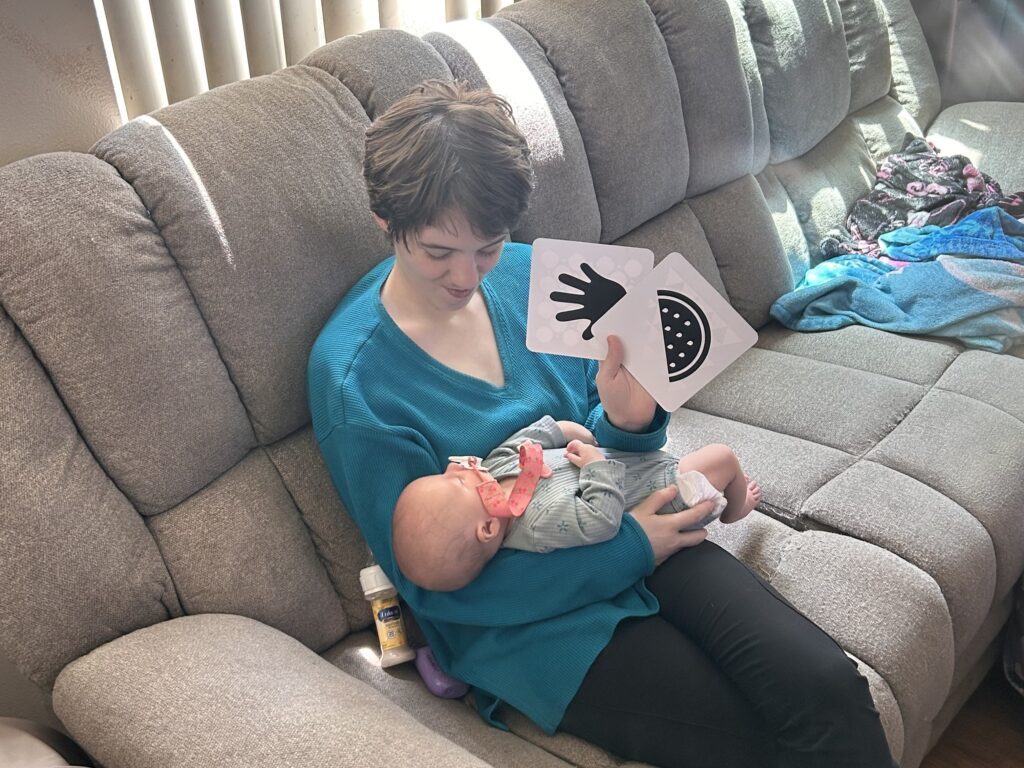
TC, an Echo program participant, holds up pictures of symbols while engaging with their baby. Photo courtesy of Janus Youth Programs

Above: TC, an Echo program participant, holds up pictures of symbols while engaging with their baby. Photo courtesy of Janus Youth Programs

“The Echo program has been a positive part of my life. It has given me support, helpful resources, and it is helping me become more confident as a parent.”

TC
Echo program participant

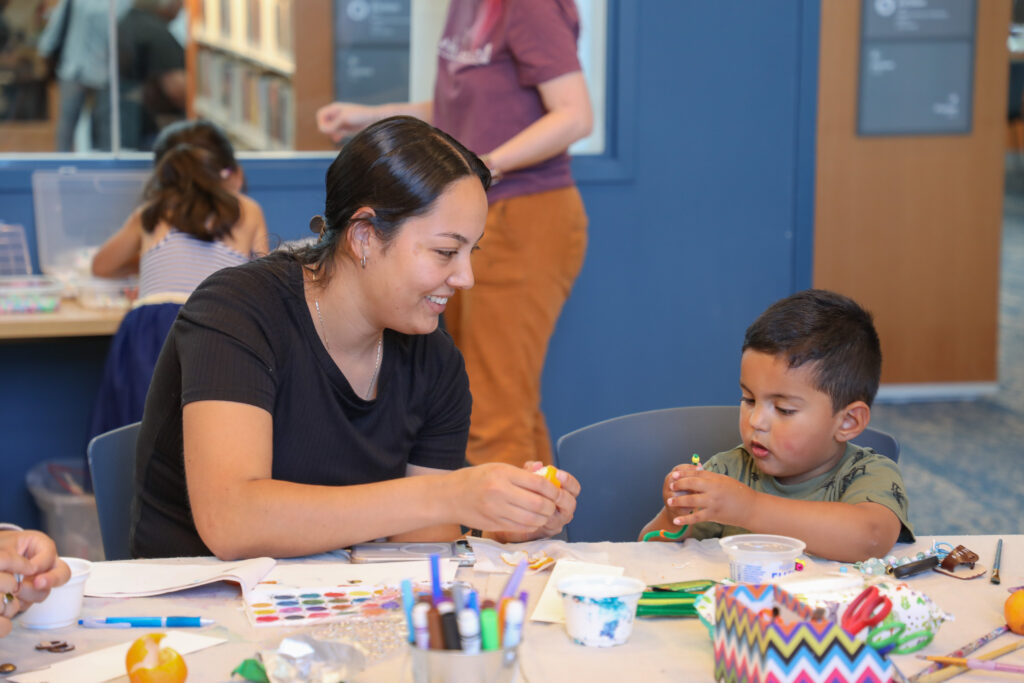
Photo of woman seated on the left in a black t-shirt peeling a mandarin orange. She smiles while looking at her son, who is sitting to her left wearing a green t-shirt while stringing a bead onto his pipe cleaner.

Above: Mother Samantha Muñoz (left) peels a mandarin orange for her son, Julian, 2, as he strings a bead onto a pipe cleaner. Muñoz also brought along her daughter, Jasmin, 5, to bead and make bookmarks during a collaborative session offered by IRCO and the Children’s Healing Art Project.

“We did assessments for how my daughter behaved, her milestones compared to other children that age. That was helpful because I started to read to her more often and using the pencils more often. It was helpful when she started preschool.”

Samantha Muñoz
CAPI program participant

Home visits are also a hallmark of the Immigrant and Refugee Community Organization’s child abuse prevention and intervention (CAPI) program. Family engagement events and group activities include visits to destinations like OMSI, the Oregon Zoo, parks and libraries. Parents also receive diapers, clothes, and are connected to other community services and resources. Services are offered in Spanish, Vietnamese, Farsi, Arabic and other languages.

Participants are families with low incomes, including immigrants and refugees, along with their children. Many families served by IRCO also face additional challenges and stress from federal immigration initiatives.

Program services focus on enhancing protective factors like building community and positive parenting practices, while reducing risks for abuse, neglect and domestic violence, said Diana Cordway, an IRCO parent educator. “These groups help kids be social with other kids and families,” she said.

IRCO logo

Some programs support pregnant mothers even before they give birth. The Parent-Child Development Services program at Impact NW offers home and personal visits and parent-child group services for children prenatal to 3 years old. Families receive child development and health screenings, and parenting skill support is also offered. For children ages 3 to 5, the program builds school readiness and social skills.

Regular playgroups held at the Brentwood-Darlington Community Center and other sites in Southeast Portland allow children and parents to play and interact with other families while learning about nutrition, child development and parenting strategies.

Impact NW logo
Photo of Maryuri sitting on the floor on the right with their two younger children on the left, who are crouching behind toys.

Above: Maryuri (right) and her family participate in Impact NW’s Parent Child Development Services program, though which they also receive clothing, diapers and other resources. Photo courtesy of Impact NW

“I have two young children and a teenager, and being part of the program makes me feel accompanied and supported, especially since I do not have a network of family or friends here. It is very important to me to be able to share in my children’s growth and development. One of my children is autistic, and I love that he is able to learn and socialize through the play groups. My youngest daughter adores her workers and the entire team. My husband, my children, and I have never felt alone when it comes to resources, food assistance and so many other needs.”

Maryuri
Parent-Child Development Services program participant

Nurturing growth

Nutrition is vital to support growth, especially as federal policies lead to growing demand for hunger relief programs.

More than 3,000 students at nearly a dozen sites across Northeast and East Portland participated in preparing and maintaining school gardens and harvested produce through the Youth Grow program from Growing Gardens. The program also provides family workshops at school sites and gardening education workshops.

Growing Gardens logo
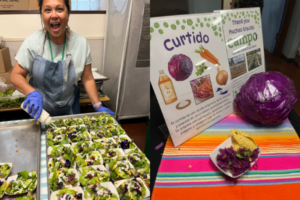
Left: photo of person standing in school cafeteria in front of a tray of garden salads in small, paper sampler trays. The person is adding dressing from a squeeze bottle to the samples. Right: Two signs that explain the ingredients in curtido, like the purple cabbage on the right of the table. A small, paper sampler tray with curtido is in the foreground on top of a multi-colored placemat.

Left: Growing Gardens staff member Carla prepares a garden salad for students at Scott Elementary School. Right: Signs and a sample of curtido, a Salvadoran cabbage slaw, for Scott students to taste at lunch. Photos courtesy of Growing Gardens

“At the curtido cafeteria tasting, the samples were literally flying out of my hands, and we were filling cups non-stop. For each lunch rotation, we handed out samples at the table as kids went through the lunch line. Then, I walked around the cafeteria with a tray of samples, and the kids wanted seconds, thirds or more! I have to admit, I was skeptical of this recipe being well received since vinegar, cabbage and onions are not typically popular ingredients for elementary school kids. I seriously underestimated the visual and cultural appeal of this recipe, and the positive peer-pressure spirit of a cafeteria tasting.”

Amber Roth
Youth Grow garden coordinator at Scott Elementary

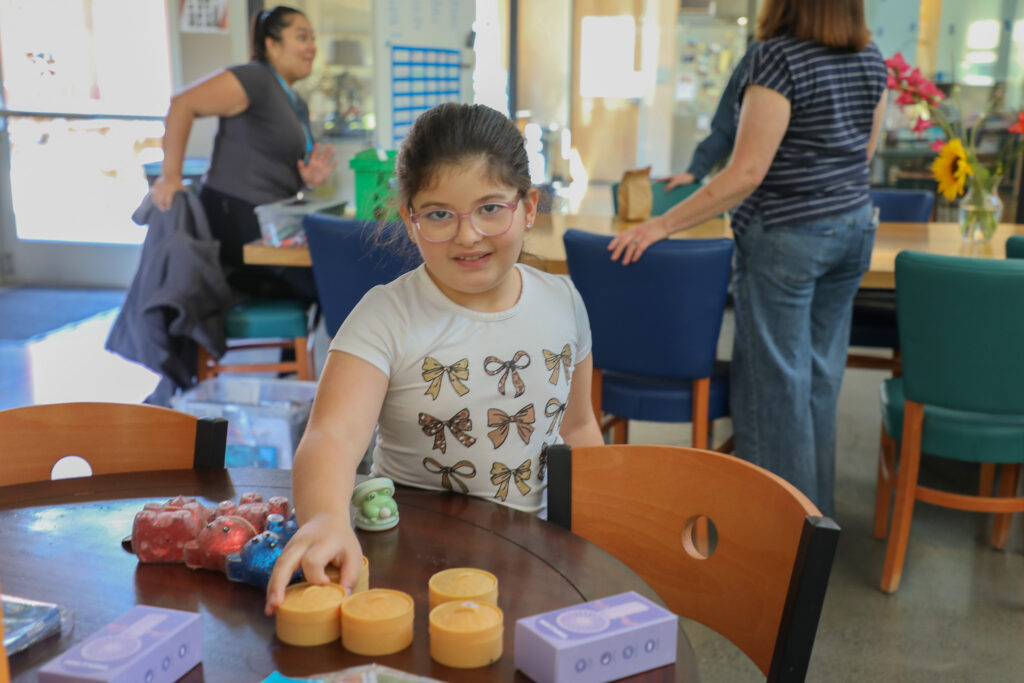
Growth happens not just during the school year but throughout the summer as well. Friends of the Children offers a six-week summer literacy camp for students who participate in the PCL-supported mentoring and foster care programs.

Students meet twice a week from late June to early August. During each three-hour session, children rotate through several stations to create art, spend time in the garden and read with tutors from Reading Results. The children earn pretend money for successfully completing tasks that they can use to purchase toys and other incentives.

“The goal is to combat summer learning loss,” said Ciara Wade, chief program officer at Friends of the Children. “Across the board, we see at least one level of reading improvement.”

Child wearing white t-shirt and glasses stands in front of a table. Right hand reaches out to choose a squishy toy. Two adults stand at another table in the background.

Above: Lucy, 7, chooses a squishy toy to purchase using the pretend money earned from participating in summer literacy camp at Friends of the Children.

“I like the garden because you can water plants, and I like to go to the gym, and I like to eat pepperoni pizza.”

Lucy
summer literacy camp participant at Friends of the Children

The next generation blossoms

Through the support of programs like Our Just Future’s LearnLinks, children develop social-emotional skills while receiving support for school success.

The after school and summer program provides academic support and enrichment activities for more than 100 children in kindergarten through 12th grade who live at affordable housing communities in East Portland. Students receive individualized support for English language literacy, math and homework. Program staff also connect with school staff and parents regarding academic progress.

Structured activities allow students to practice empathetic listening, cooperation, and positive communication, and participants build leadership skills by taking turns to facilitate group activities.

Our Just Future logo
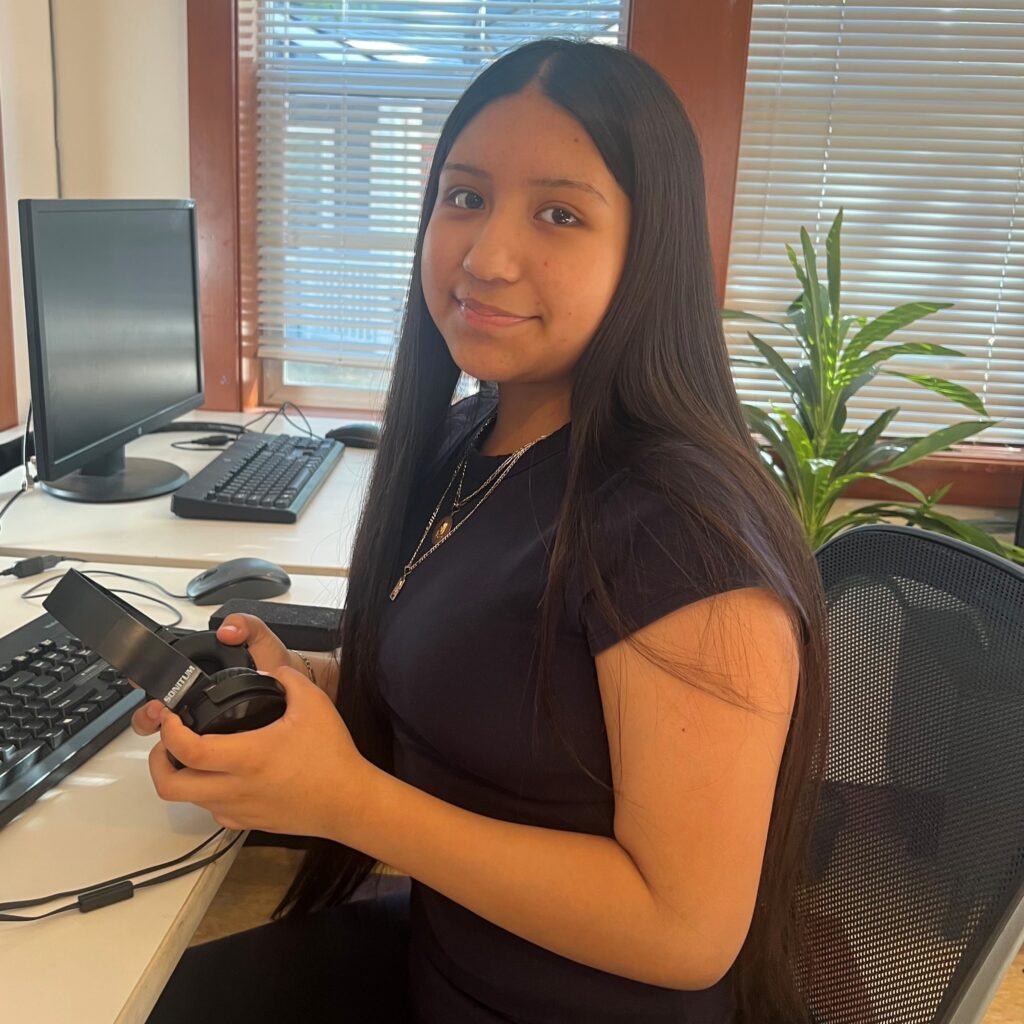
Photo of a student in a black top, holding headphones, and sitting in an office chair in front of a computer keyboard. The student is looking at the camera and smiling.

Above: A LearnLinks participant at Sequoia Square affordable housing community. Photo courtesy of Our Just Future

“When we do activities, we talk more. We like doing projects that start off difficult and overwhelming and seeing it through to completion. The staff are a great support guiding us through not getting overwhelmed. I used to be shy in school, and coming to the group helped me feel more comfortable joining conversations at school and asking for help more often.”

LearnLinks participant
featured in photo

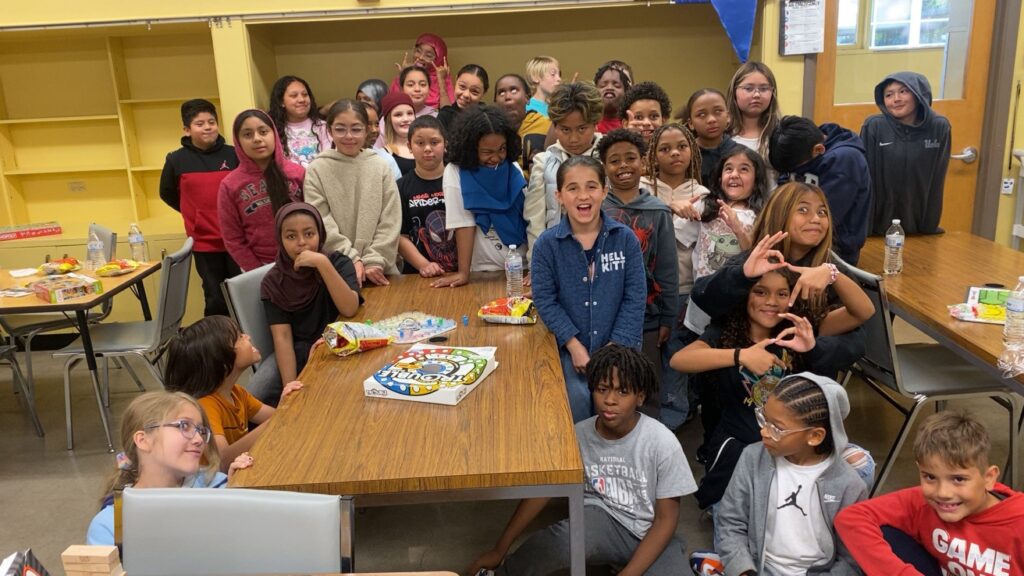
A group of about 30 students stand and sit around a table in a classroom.

Above: Elevate Youth participants receive mentoring in and outside the classroom. Photo courtesy of Elevate Youth


“Elevate has pushed me to literally elevate academically, helped me stay on my work and gave me a strong support system. While also outside of academics, they taught me to value everyone as family and treat others as your own.”

Class of 2026 Elevate program participant

PCL grants also support the growth of community-based organizations. The small grants program started in 2020 to increase access to PCL funds for smaller nonprofits and strengthen their capacity to serve children, youth and families. PCL supports small grantee partners by providing technical assistance and offering training opportunities.

Of the seven small grant recipients in the inaugural cohort, four of the organizations grew their annual revenues and successfully applied for large grants in the 2024-25 funding round.

One of those organizations was Elevate Youth, which provides mentoring services to youth in grades 6 through 12 at Parkrose Middle and High schools. In addition to group mentoring, summer camps, and classes, the program also emphasizes the development of 13 characteristics and life skills, such as a positive work ethic, communication, goal-setting, problem-solving and decision-making.

Elevate Youth logo

Promises made, promises kept

A complete list of current grantee partners can be found on the Portland Children’s Levy website.

For more information, view the 2024-25 performance data slide deck and appendix.

Stay tuned for next year’s report to learn more about how voter investments make a difference in the lives of Portland children and families.